Seven days in Italy is enough time to understand why this country has been drawing travelers from every corner of the world for centuries. It is not enough time to see everything — no amount of time is enough for that — but it is exactly enough time to experience three of the greatest cities in human history at a pace that allows each one to reveal itself properly. Rome, Florence, and Venice are not interchangeable stops on a highlight reel. They are three distinct civilizations, three distinct ways of organizing urban life, three distinct relationships with beauty and history and food. A week that moves between them thoughtfully — spending real time in each, eating properly, walking neighborhoods rather than rushing between monuments — produces one of the finest travel experiences available anywhere in the world.
This itinerary is designed for first-time visitors to Italy who want to do the classic route correctly. It covers three nights in Rome, two nights in Florence, and two nights in Venice. This distribution is deliberate: Rome is the largest and most complex of the three cities and rewards the most time; Florence is intense and concentrated and two full days covers it well; Venice is small enough to absorb thoroughly in two days while remaining inexhaustible in its atmosphere. The route moves north from Rome to Florence to Venice, finishing in the city with the most convenient international rail and air connections for departure.
What makes this itinerary different from a checklist of monuments is that it treats eating, walking, and neighborhood exploration as equal in importance to the famous sights. The Sistine Chapel is extraordinary. So is a plate of cacio e pepe at a Roman trattoria on a Tuesday night. The Uffizi Gallery is one of the greatest museums in the world. So is a Florentine bistecca fiorentina, the T-bone steak of Chianina beef cooked over wood fire, eaten with a glass of Chianti at a wooden table. The experience of Italy is not separable into culture and food and atmosphere — it is all the same thing, and this itinerary treats it that way.
This article is part of our broader Italy travel coverage. For detailed city planning, see our Rome City Guide, Florence City Guide, and Venice City Guide.
👉 Italy Travel Guide: Rome, Florence, Venice, Milan & everything you need to plan your Italy trip →
👉 Rome City Guide: The Colosseum, the Vatican, Trastevere & the world’s greatest ancient city →
Before You Go: Essential Italy Planning
Book These in Advance — No Exceptions
Italy’s most famous attractions operate on timed entry tickets that sell out weeks, sometimes months, ahead. Arriving without pre-booked tickets means either missing the attraction entirely or spending hours in queue in the Italian sun. Book the following before you leave home, without exception:
The Vatican Museums and Sistine Chapel — book directly through the Vatican Museums website (museivaticani.va). Standard tickets include the Sistine Chapel; early morning entry (first slot of the day) gives you the chapel before the tour groups arrive. This is the single most important booking of the entire trip.
The Colosseum and Roman Forum — book through the official Colosseo website (colosseo.it). The combined ticket covers the Colosseum, Roman Forum, and Palatine Hill. Book the first entry slot of the day for the Colosseum before the heat and crowds build.
The Uffizi Gallery in Florence — book through the Uffizi website (uffizi.it). July and August tickets sell out weeks ahead; even in shoulder season, same-day availability is not guaranteed.
The Accademia Gallery in Florence (Michelangelo’s David) — book through the same portal as the Uffizi. Queues without pre-booked tickets are consistently long regardless of season.
Getting Between Cities
The train is the definitive way to travel between Rome, Florence, and Venice. Italy’s high-speed rail network — operated by Trenitalia (Frecciarossa) and Italo — connects all three cities efficiently and comfortably. Rome to Florence takes approximately 1 hour 30 minutes on the high-speed service. Florence to Venice takes approximately 2 hours 10 minutes. Book through Trenitalia (trenitalia.com) or Italo (italotreno.it) well in advance — early booking prices are significantly lower than walk-up fares, and first class is often only marginally more expensive than second class when booked ahead.
Getting Around Within Cities
Rome is large and best navigated by a combination of walking (the historic center is very walkable) and the metro (Line A covers the Vatican, Spanish Steps, and Termini; Line B covers the Colosseum). Taxis and Uber operate throughout. Florence is the most walkable of the three cities — the historic center is a UNESCO World Heritage site and almost entirely pedestrianized; everything is reachable on foot. Venice has no cars, no bikes, and no motor vehicles of any kind — the city is navigated entirely on foot and by waterbus (vaporetto). Buy a multi-day vaporetto pass on arrival; it covers all the canals and the Giudecca and is the correct way to navigate the city.
When to Go
The best months for this itinerary are April, May, September, and October — warm enough for outdoor dining and sightseeing, cool enough for comfortable walking, and significantly less crowded than July and August. June is good but increasingly busy. July and August are peak season — very hot (35°C+ in Rome and Florence), very crowded at every major attraction, and correspondingly expensive. If summer is your only option, book everything months in advance and plan outdoor sightseeing for early morning and evening. December through February is the quietest and most affordable period; Rome and Florence are mild; Venice in winter, with the acqua alta flooding and the mist on the lagoon, is extraordinarily atmospheric.
👉 Where to Stay in Rome: The best Rome neighborhoods and hotels for first-time visitors →
👉 Where to Stay in Florence: The best Florence neighborhoods and hotels for every budget →
👉 Where to Stay in Venice: The best Venice neighborhoods and hotels — and why location matters more here than anywhere →
Rome: Days 1, 2 & 3
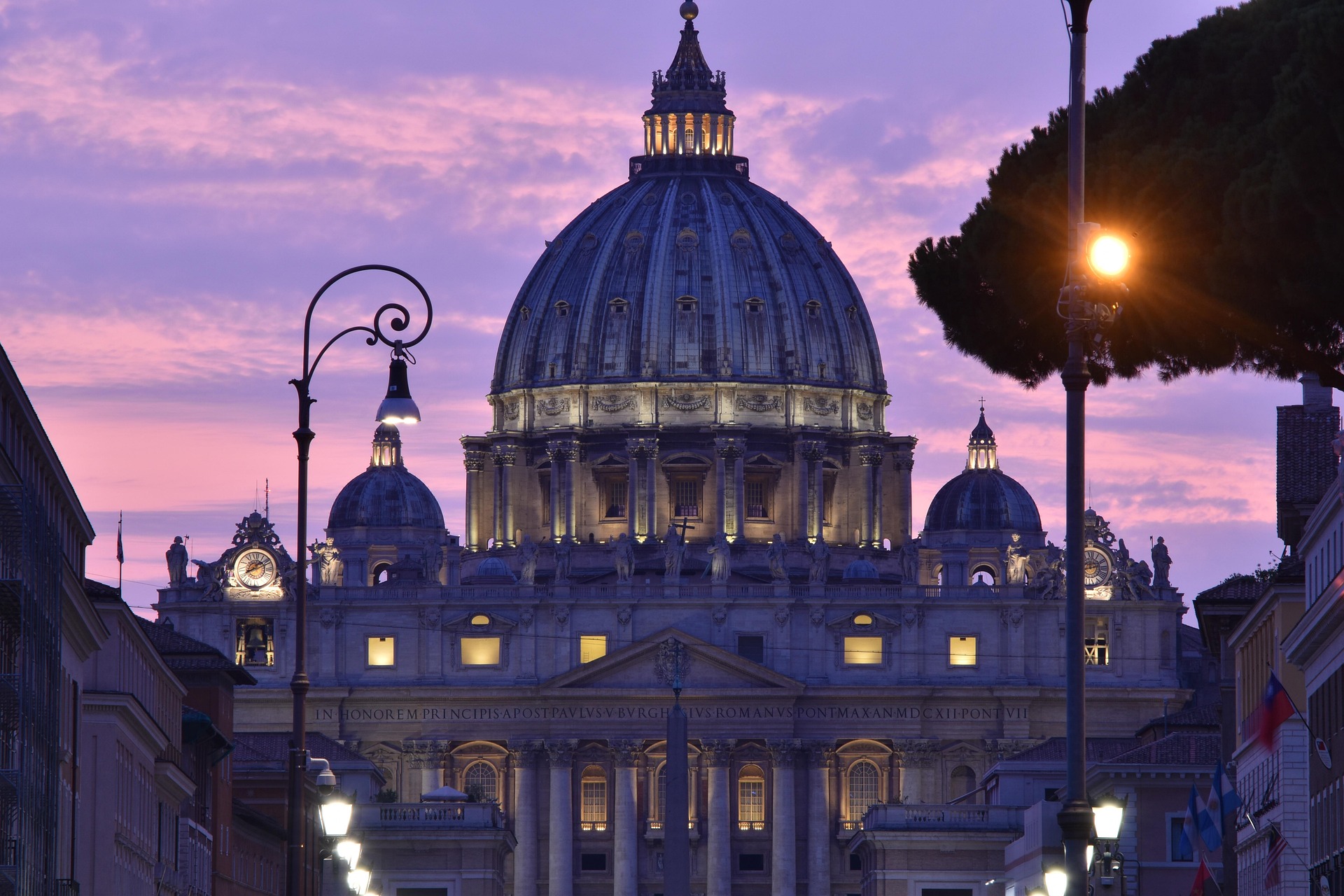
Rome receives three nights because it deserves three nights — and honestly could absorb a week without exhausting itself. The city contains more UNESCO World Heritage sites within its boundaries than any other city in the world. The layers of civilization — Republican Rome, Imperial Rome, early Christian Rome, medieval Rome, Renaissance Rome, Baroque Rome, and the living city of 2.8 million people going about their daily lives — are literally stacked on top of each other in ways that are visible from the street. A section of Roman aqueduct embedded in an apartment building wall. A Baroque church built over a Republican-era temple. A medieval tower rising from ancient foundations. Rome is not a city with history in it; it is a city made of history, and understanding this changes how you walk through it.
Stay in the historic center — the area bounded roughly by the Colosseum to the east, the Vatican to the west, the Villa Borghese to the north, and the Tiber to the west. Trastevere, the Campo de’ Fiori area, and the streets around the Pantheon are all excellent bases. Avoid staying near Termini station unless budget is the absolute priority — it is convenient for transport but lacking in the neighborhood atmosphere that makes Rome memorable.
Day 1: Arrival in Rome — Ancient Rome and the First Evening
Arrive in Rome and resist the temptation to immediately attack the monuments. The first afternoon is for orientation — for walking the streets of the historic center, finding your bearings, and making first contact with the city on its own terms. Rome does not reveal itself to visitors who rush at it; it reveals itself to those who sit with it.
After checking in, walk to the nearest piazza and order a coffee at the bar — standing, as Romans do, not sitting, which costs more and is slightly incorrect. The Roman espresso, pulled short and intensely flavored, is the correct caffeine delivery system for an Italian city. Order it, drink it in 30 seconds, and return to the street. You have just done something more specifically Roman than visiting most monuments.
Spend the afternoon walking the streets of the centro storico — the historic center. The Piazza Navona, built over the stadium of Domitian and still retaining its oval shape 2,000 years later, is one of the finest Baroque piazzas in Europe. Bernini’s Fountain of the Four Rivers at its center — four colossal river gods representing the Nile, Danube, Ganges, and Río de la Plata — is the finest single fountain in Rome. The Pantheon, ten minutes east, is the best-preserved ancient Roman building in the world — its concrete dome, completed in 125 AD, remained the largest in the world for 1,300 years and still inspires architectural awe in everyone who stands beneath it and looks up at the oculus open to the sky.
In the evening, walk to Trastevere for dinner — the neighborhood across the Tiber that has preserved the character of working-class Rome more successfully than almost anywhere else in the centro storico. The streets are narrow, the buildings are medieval, the restaurants spill out onto the cobblestones, and the atmosphere on a warm evening is the essential Roman restaurant experience. Order cacio e pepe — Rome’s greatest pasta dish, spaghetti with Pecorino Romano cheese and black pepper, simple and devastatingly good when made correctly — and a carafe of house white wine. This is Rome.
Day 2: The Vatican — The Greatest Museum in the World
Day two is dedicated entirely to the Vatican. This is not an exaggeration of the time required — the Vatican Museums alone could occupy a full day, and the Sistine Chapel, St. Peter’s Basilica, and St. Peter’s Square together constitute the most extraordinary concentration of art and architecture in the world. Attempting to rush this into a half-day alongside other sightseeing is the single most common mistake first-time Rome visitors make.
Arrive at your pre-booked Vatican Museums entry slot as early as possible — the first slot of the day (typically 8am or 9am) gives you the Sistine Chapel before the tour groups that arrive mid-morning. The Vatican Museums contain over 70,000 works of art across 54 galleries; the highlight route that most visitors follow moves through the Gallery of Maps, the Raphael Rooms, and into the Sistine Chapel. The Gallery of Maps — a long corridor with 40 topographical maps of Italy painted on the walls and ceiling in the 16th century — is one of the most visually overwhelming corridors in the world. The Raphael Rooms — four rooms painted entirely by Raphael and his workshop, including the School of Athens — are the finest Renaissance fresco cycle outside the Sistine Chapel itself.
The Sistine Chapel requires its own paragraph. Michelangelo painted the ceiling between 1508 and 1512, lying on his back on a specially constructed scaffold, covering 500 square meters with the most famous painted ceiling in human history. The Creation of Adam — God’s outstretched finger nearly touching Adam’s — is the most reproduced image in Western art. In person, in the actual chapel, the ceiling is simultaneously more overwhelming and more intimate than any reproduction suggests. The Last Judgment on the altar wall, painted 25 years later, is equally extraordinary and considerably more unsettling. Stand in the center of the chapel and look up. Allow time for this.
After the Vatican Museums, walk across St. Peter’s Square — Bernini’s colonnade embracing the square in what he described as the church’s arms welcoming the faithful — and enter St. Peter’s Basilica. The basilica is free to enter and is the largest church in the world — its scale is so extreme that it takes several minutes to calibrate. Michelangelo’s Pietà (behind bulletproof glass since 1972) is in the first chapel on the right; Bernini’s baldachin over the papal altar, cast from bronze stripped from the Pantheon’s portico, rises 29 meters above the nave. Climb to the dome for views over Rome that justify every step.
Spend the afternoon in the Borgo neighborhood adjacent to the Vatican, or cross the Tiber back to the centro storico for the Castel Sant’Angelo — the cylindrical fortress built as the mausoleum of the Emperor Hadrian, converted to a papal fortress in the medieval period, connected to the Vatican by the elevated passetto corridor that popes used to escape during sieges. The views from the top over the Tiber and the city are excellent. In the evening, eat in the Prati neighborhood directly north of the Vatican — less touristy than Trastevere, excellent trattorias, and the Roman locals who work in the area give it an authenticity that the most visited neighborhoods increasingly lack.
Day 3: Ancient Rome and the Baroque City
Day three covers the ancient city and the Baroque Rome that overlaid it in the 17th century — the two periods that most define Rome’s visual identity and its place in world history.
Start early at the Colosseum — book the first entry slot to experience the amphitheater before the crowds and the heat build. The Flavian Amphitheatre, completed in 80 AD, held 50,000 to 80,000 spectators for gladiatorial combat, animal hunts, public executions, and mock naval battles. Walking the arena floor — where the gladiators actually fought, where the sand was raked between contests, where men died for the entertainment of the Roman crowd — is one of the most affecting historical experiences in Europe. The underground hypogeum (where animals and gladiators were held before their appearance in the arena) is accessible with a separate ticket and worth booking.
From the Colosseum, walk through the Roman Forum — the civic center of the ancient city, where Julius Caesar was cremated, where the Via Sacra ran between triumphal arches, where the Senate met and the law courts operated for centuries. The Forum is overwhelming in its scale and its accumulation of history; a guidebook or audio guide is worth having to make sense of the ruins. The Arch of Titus, commemorating the destruction of Jerusalem in 70 AD, and the Temple of Saturn are the most striking individual monuments. Walk up to the Palatine Hill above the Forum — the hill where Rome was founded, where the emperors built their palaces, where the word “palace” itself originates (from Palatine). The views over the Forum from the Palatine are the finest in Rome.
Spend the afternoon in Baroque Rome — the Rome of Bernini and Borromini, who between them redesigned the city’s churches, fountains, and public spaces in the 17th century with a theatrical exuberance that makes Rome the most dramatic city in Europe. The Trevi Fountain — the largest Baroque fountain in Rome, fed by one of the ancient aqueducts, and the setting of the famous Fellini scene — is at its best very early in the morning or late at night when the crowds thin. The Spanish Steps, the Piazza del Popolo, and the churches of Sant’Ignazio (with its extraordinary trompe l’oeil ceiling) and San Luigi dei Francesi (with three Caravaggio paintings of St. Matthew) are all within walking distance of each other in the northern centro storico.
For your final Rome evening, eat in the Jewish Ghetto neighborhood — one of the oldest continuously inhabited Jewish communities in the world, with a distinct Roman-Jewish cuisine (carciofi alla giudea, the deep-fried artichokes that are one of the finest dishes in Rome) and a neighborhood atmosphere of particular historical depth.
👉 What to Eat in Rome: Cacio e pepe, supplì, carciofi alla giudea & Rome’s extraordinary food culture →
👉 Rome City Guide: Neighborhoods, monuments, day trips & everything to do in Rome →
Florence: Days 4 & 5
Take the morning Frecciarossa from Roma Termini to Firenze Santa Maria Novella — the 1 hour 30 minute journey is one of the finest train rides in Italy, cutting north through the Lazio and Tuscan countryside. Arrive in Florence by late morning and check into your hotel in the centro storico — stay within the ring of medieval walls, ideally between the Duomo and the Arno, where everything is walkable.
Florence is the most concentrated great city in Italy — smaller than Rome and Venice in geographic terms, but containing a density of Renaissance art and architecture that is unmatched anywhere in the world. The city that produced Brunelleschi, Donatello, Botticelli, Leonardo da Vinci, and Michelangelo in the space of a century — that built the dome that dominated European architecture for 500 years, that commissioned the Birth of Venus and the Primavera, that gave the world the banking system and the concept of perspective in art — is not a large city. It is a city of 370,000 people that changed human civilization. Walking its streets with that understanding gives even the most ordinary Florentine piazza a particular weight.
Day 4: The Duomo, the Uffizi, and Florentine Renaissance
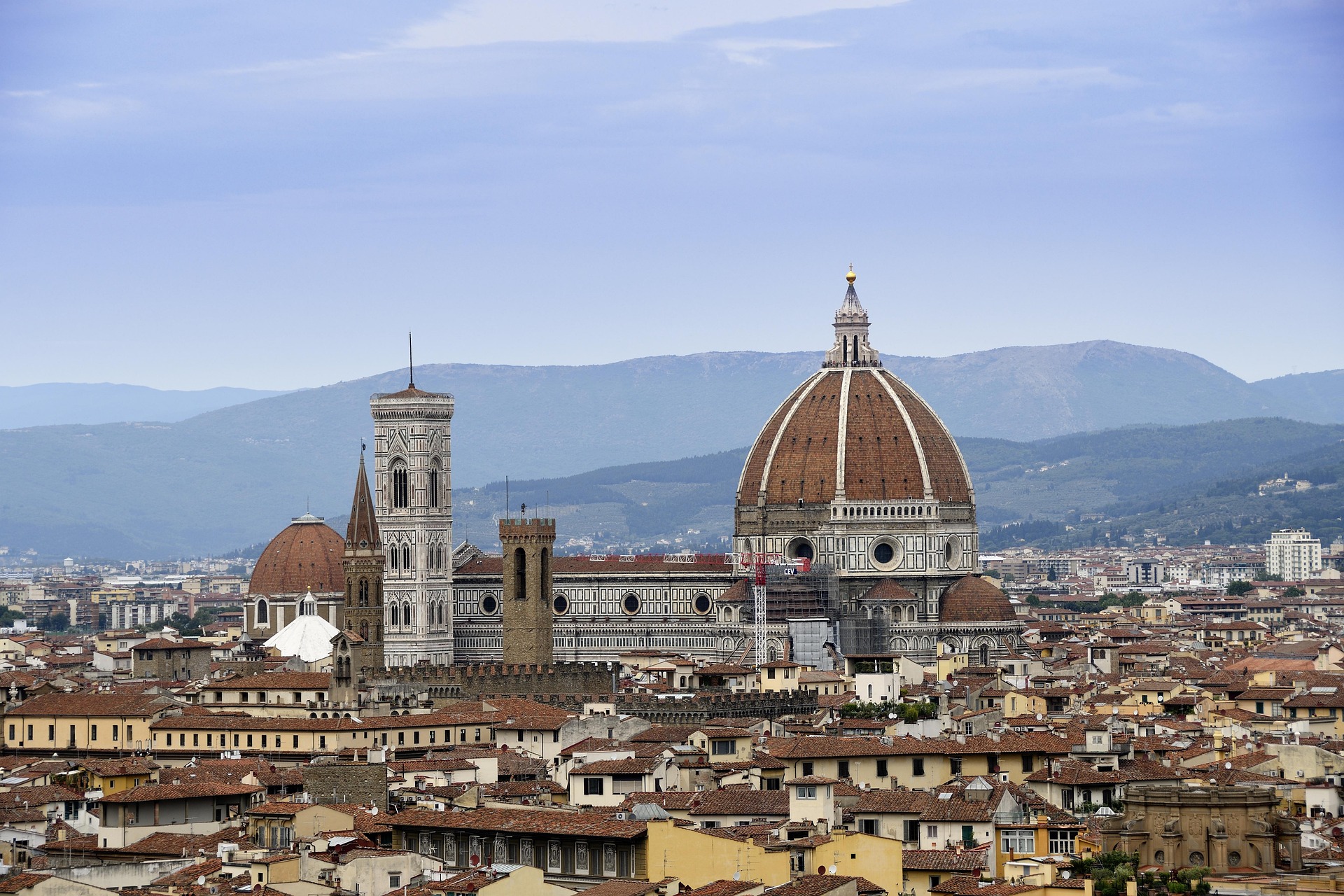
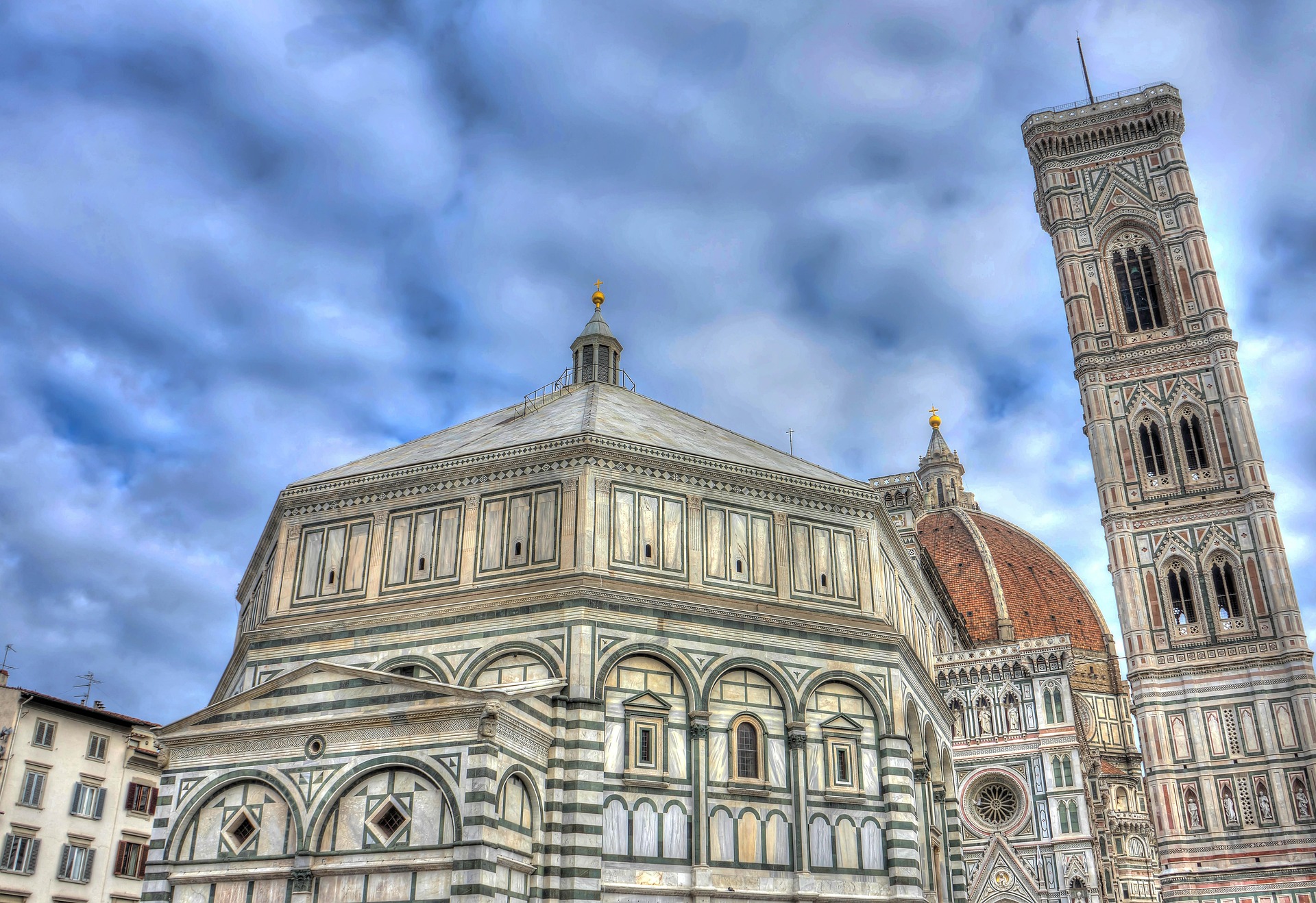
Start the morning with the Duomo complex — the Cathedral of Santa Maria del Fiore, Brunelleschi’s dome, Giotto’s campanile, and the Baptistery of San Giovanni. The cathedral is free to enter but the dome climb, the campanile climb, and the Baptistery all require tickets, bookable through the Opera del Duomo website. Brunelleschi’s dome — built between 1420 and 1436, the largest masonry dome ever constructed, built without centering using a double-shell herringbone brick technique that Brunelleschi invented specifically for this project — is the defining monument of Florence and one of the greatest architectural achievements in human history. Climb it. The 463 steps wind between the inner and outer shells, passing Vasari’s Last Judgment fresco at close range before emerging onto the lantern with views over the terracotta rooftops of Florence and the Tuscan hills beyond. Allow 45 minutes for the climb and the view.
Spend the late morning in the Uffizi Gallery — one of the great art museums of the world, housed in the administrative building (uffizi means offices) commissioned by Cosimo I de’ Medici in the 16th century. The Uffizi collection traces the development of Western painting from Byzantine icons to the High Renaissance in a sequence of rooms that constitutes the most coherent art historical narrative available in a single building. The highlights — Botticelli’s Birth of Venus and Primavera (both in Room 10-14, the most visited rooms in the museum), Leonardo’s Annunciation, Michelangelo’s Doni Tondo, Titian’s Venus of Urbino, Caravaggio’s Medusa — are all extraordinary in person in ways that their ubiquitous reproduction cannot convey. Allow a minimum of two hours; three is better.
After the Uffizi, cross the Ponte Vecchio — the medieval bridge lined with jewelers’ shops, the only bridge in Florence not destroyed by the retreating German army in 1944 (reportedly on Hitler’s personal order) — to the Oltrarno neighborhood on the south bank of the Arno. The Oltrarno is the most authentically Florentine neighborhood — the artisans’ quarter, with leather workshops, picture framers, furniture restorers, and the small restaurants and wine bars where Florentines actually eat. Lunch here on a plate of ribollita (the thick Tuscan bread and vegetable soup) or a lampredotto sandwich from a street cart — the Florentine tripe tradition is one of the most specifically local food experiences in Italy.
In the afternoon, visit the Pitti Palace and the Boboli Gardens. The Pitti Palace — the enormous Renaissance palace that became the principal residence of the Medici after Cosimo I moved from the Palazzo Vecchio — houses several museums including the Palatine Gallery, which contains a second extraordinary collection of Renaissance and Baroque paintings (Raphael, Titian, Rubens, and Caravaggio) displayed in the original palatial rooms exactly as they were hung in the Medici period. The Boboli Gardens behind the palace are one of the finest Italian formal gardens in existence, climbing the hillside behind the palace with fountains, grottoes, and views over Florence and the surrounding hills.
For dinner, the Oltrarno has the finest restaurant scene in Florence — less tourist-facing than the streets around the Duomo, with a concentration of excellent trattorias, natural wine bars, and the kind of neighborhood eating that Florence does better than anywhere. Order bistecca fiorentina — the enormous T-bone steak of Chianina beef, cooked rare over wood fire and served by weight — at least once during your Florence stay. It is one of the great dishes of Italy and it is specifically, irreducibly Florentine.
Day 5: Michelangelo’s David, the Medici, and Tuscan Afternoon
Start day five at the Accademia Gallery for Michelangelo’s David — the 5.17-meter marble statue carved between 1501 and 1504 from a single block of Carrara marble that had been lying unused in the Opera del Duomo’s courtyard for 25 years. Previous sculptors had attempted it and abandoned the project; Michelangelo, 26 years old, completed it in two years and produced what is widely considered the finest sculpture ever made. In person, in the Accademia’s purpose-built tribune, the David is simultaneously more beautiful and more physically imposing than any photograph conveys — the scale, the tension in the hands, the expression of concentrated alertness on the face (David looking at Goliath before the throw, not after) are all details that only the original reveals. Allow an hour; the rest of the Accademia collection, including Michelangelo’s unfinished Prisoners, is also worth seeing.
Spend the mid-morning in the San Lorenzo neighborhood — the Medici’s home district, containing the Basilica di San Lorenzo (the Medici family church, with Brunelleschi’s sacristy and Michelangelo’s New Sacristy housing the Medici tombs), the Medici Chapels (the extraordinary mausoleum where the Medici Grand Dukes are buried under Michelangelo’s Night, Day, Dawn, and Dusk sculptures), and the Mercato Centrale (the cast-iron covered market, best visited in the morning when the ground floor food stalls are at their most active).
After lunch, consider a half-day excursion into the Tuscan countryside — achievable by rental car or organized tour from Florence. The Chianti wine country between Florence and Siena, with its rolling hills of olive groves and vineyards, medieval hill towns (Greve in Chianti, Panzano, Radda), and estate wineries offering tastings and vineyard tours, is one of the finest half-day trips in Italy. Alternatively, the hilltop town of Fiesole — 8km northeast of Florence by bus — gives extraordinary views over the Arno valley and has its own Roman amphitheater and Etruscan remains.
Return to Florence for a final evening in the city. Spend it in the way that best represents what Florence has given you — a return to the Ponte Vecchio at sunset when the light on the Arno turns gold, an aperitivo at one of the rooftop bars with views of the Duomo, or a final dinner in the Oltrarno at the trattoria you liked best. Florence rewards return visits more than almost any city in Italy; leaving it with the intention of coming back is the correct emotional response.
👉 What to Eat in Florence: Bistecca fiorentina, ribollita, lampredotto & Florence’s extraordinary food culture →
👉 Florence City Guide: The Duomo, the Uffizi, the Oltrarno & everything to do in Florence →
Venice: Days 6 & 7
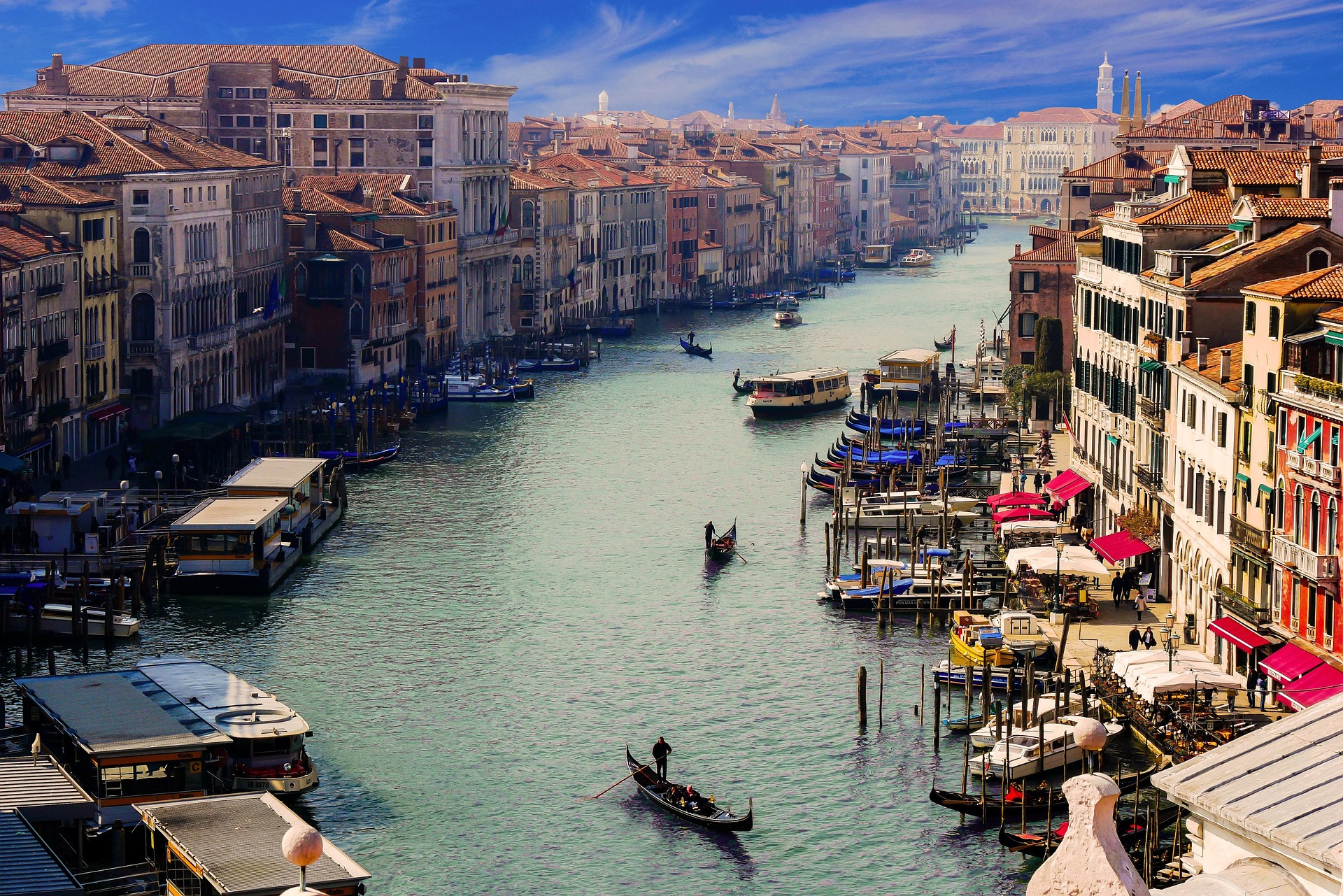
Take the morning Frecciarossa from Firenze Santa Maria Novella to Venezia Santa Lucia — the 2 hour 10 minute journey arrives directly into the heart of Venice at the Santa Lucia station on the Grand Canal. Step out of the station and you are immediately confronted with one of the most extraordinary urban vistas in the world: the Grand Canal curving away before you, lined with Renaissance and Gothic palazzi, the vaporetto water buses moving between the stops, and the specific quality of Venetian light — refracted by water, softened by lagoon haze — that has made the city the subject of more paintings than any other place on earth.
Venice is unlike any other city in the world. Built on 118 small islands connected by 400 bridges over 150 canals, with no cars, no bicycles, no motor vehicles of any kind, it operates at a pace entirely its own — slower, more disorienting, more beautiful than the rational city grid allows. Getting lost in Venice is not a failure of navigation; it is the correct way to experience the city. The streets (called calle) are rarely straight, frequently dead-end at canals, and navigate by a logic that rewards surrender rather than resistance. Carry a rough mental map of the six sestieri (districts) and let the rest happen.
Stay in Cannaregio, Dorsoduro, or San Polo — the three neighborhoods that give the most authentic Venice experience. Avoid San Marco for accommodation if possible; it is the most expensive and least lived-in sestiere, and staying there means waking up to tourist crowds rather than the quiet morning Venice that residents experience. The difference between Venice at 7am (magnificent, still, the only sounds the water and the bells) and Venice at 11am (crowded, loud, the cruise ship passengers arriving) is one of the most dramatic in travel.
Day 6: St. Mark’s, the Grand Canal, and Venice by Water
Spend the morning in the San Marco sestiere — the political and religious heart of the Venetian Republic for over a thousand years. St. Mark’s Basilica, the Cathedral of the Doge, is the most extraordinary church in Italy and one of the most extraordinary buildings in the world — its five domes, its golden mosaics (covering 8,000 square meters of interior surface), its Byzantine and Gothic and Romanesque elements fused into something entirely Venetian, and its history as the repository of the spoils of the Venetian Republic’s trading empire (the four bronze horses above the entrance, looted from Constantinople in 1204; the porphyry tetrarchs on the corner, also from Constantinople) make it the most layered single building in Italy. Book skip-the-line tickets online; the queue without them is consistently very long.
The Doge’s Palace adjacent to the basilica — the Gothic palace that served as the residence of the Doge (the elected head of the Venetian Republic), the seat of government, the law court, and the prison — is the finest Gothic secular building in Europe. The interior includes the Sala del Maggior Consiglio (the Great Council Chamber), the largest room in Europe at the time of its construction, with Tintoretto’s Paradise on the end wall — the largest oil painting in the world at 22 meters wide. The Bridge of Sighs connecting the palace to the prison — named by Byron for the sighs of prisoners taking their last view of Venice through its stone windows — is best viewed from the Ponte della Paglia on the waterfront below.
After the morning monuments, buy a vaporetto pass and spend the afternoon on the water. Take Line 1 (the slow vaporetto that stops at every Grand Canal stop) the full length of the Grand Canal from San Marco to the railway station — the 45-minute journey passes the finest sequence of Renaissance and Gothic palazzi in the world, including the Ca’ d’Oro (the most ornate Gothic palace on the canal), the Rialto Bridge, and the Palazzo Grimani. This is the finest 45-minute journey in Italy and costs the price of a vaporetto ticket.
From the station, take the vaporetto to the islands of the lagoon — Murano (the glassblowing island, where the Venetian glass tradition has been practiced since 1291, when the Republic moved the furnaces to the island to reduce fire risk in the main city) and Burano (the lacemaking island, whose extraordinary painted houses in candy colors make it one of the most photographed places in Italy). Both are reachable within 45 minutes from the main island; allow two to three hours for both combined.
In the evening, eat in Cannaregio — the northern sestiere that is the most residential and most authentically Venetian neighborhood, where the bacaro culture (the Venetian tradition of standing at a bar eating cicheti — small snacks of marinated seafood, fried morsels, and crostini — with small glasses of local wine called ombre) is at its most genuine. A bacaro crawl through Cannaregio — moving between four or five bars, eating cicheti and drinking prosecco or the local Veneto wines — is the finest and most specifically Venetian way to spend an evening.
Day 7: Dorsoduro, the Accademia, and a Final Morning in Venice
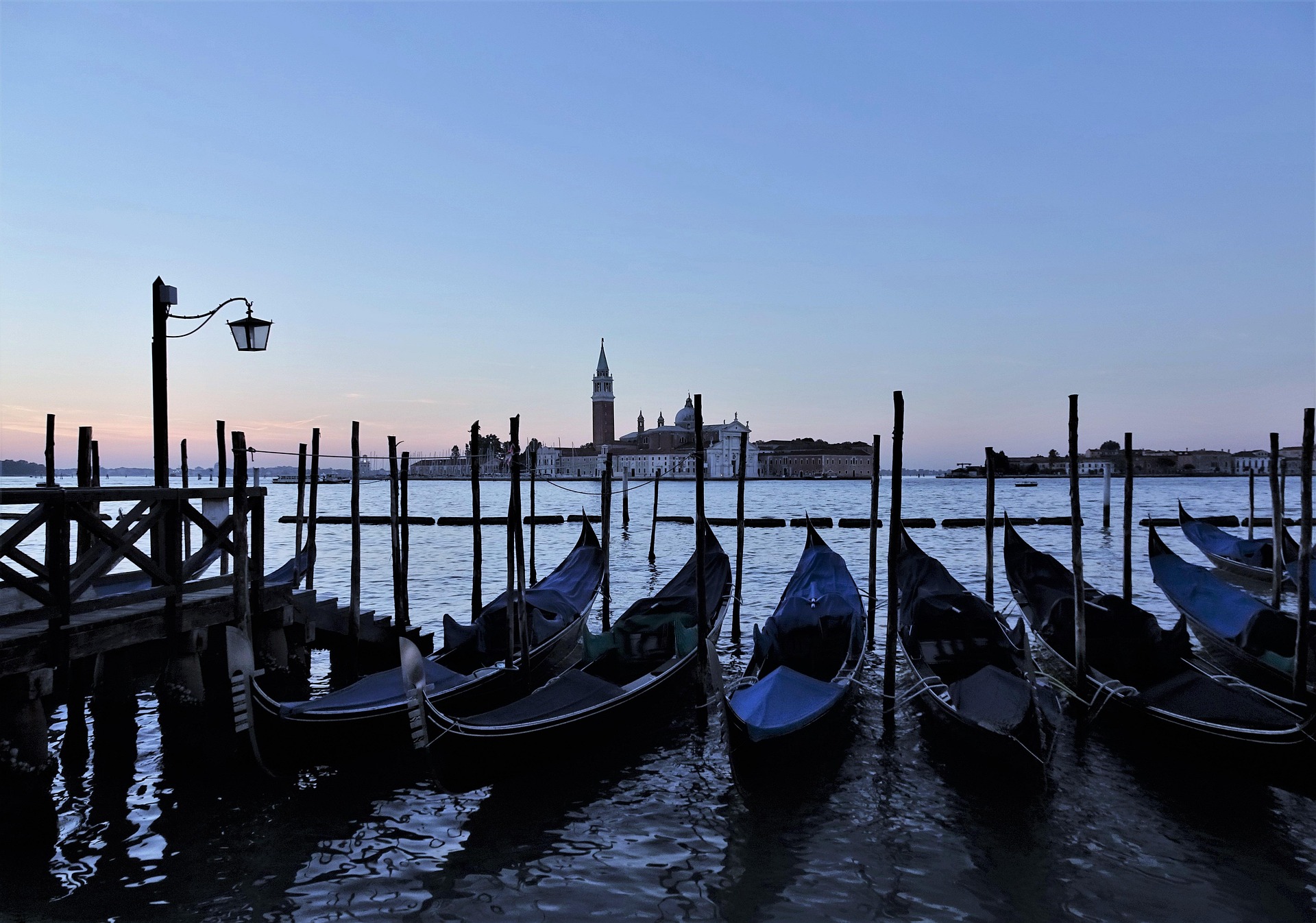
Your final day in Italy should begin early — before 8am if possible — to experience the Venice that most visitors never see. The city in the early morning, before the day-trippers arrive from the mainland, is transformed: the alleys quiet, the canals still, the light on the water extraordinary, the only movement the delivery barges bringing supplies to the restaurants and the elderly residents going to the market. Walk from your hotel through whichever neighborhood you’re staying in without a destination in mind. This is Venice at its finest.
Spend the morning in Dorsoduro — the southwestern sestiere that contains the finest concentration of museums and galleries outside San Marco. The Gallerie dell’Accademia is the finest collection of Venetian painting in the world — Bellini, Carpaccio, Titian, Tintoretto, and Veronese in extraordinary depth, tracing the entire history of Venetian art from the 14th to the 18th century in a sequence of rooms that is the Venetian equivalent of the Uffizi. The Peggy Guggenheim Collection, in the modernist palazzo on the Grand Canal that Guggenheim called home for the last 30 years of her life, is the finest collection of early 20th-century art in Italy — Picasso, Dalí, Mondrian, Pollock, and the Surrealists in a setting that manages to be simultaneously grand and intimate.
The Punta della Dogana — the former customs house at the tip of Dorsoduro where the Grand Canal meets the Giudecca Canal — has been converted into a contemporary art space by the French collector François Pinault and is one of the finest contemporary art venues in Europe. The view from the Punta della Dogana — across the water to San Marco, the campanile, and the Doge’s Palace — is the most iconic view in Venice and one of the most beautiful in the world.
Spend the final afternoon at whatever pace feels right. Revisit the corner of the city that moved you most. Sit at a canal-side café and drink a Campari spritz — the specifically Venetian aperitivo, bright orange, served with ice and a slice of orange — and watch the gondolas move past. Buy something from the Rialto market if it is morning, or from one of the artisan shops in San Polo if it is afternoon. Eat a final dinner in the sestiere you liked most. Leave Venice slowly — the city rewards a slow departure as much as a slow arrival.
👉 What to Eat in Venice: Cicheti, risotto al nero di seppia, the bacaro culture & Venice’s food scene →
👉 Venice City Guide: The sestieri, the islands, St. Mark’s & everything to do in Venice →
Departure
Venice Marco Polo Airport (VCE) is the most convenient departure point if your international flight allows — connected to Venice by water taxi (approximately 30 minutes, expensive but extraordinary) or by the Alilaguna water bus (approximately 75 minutes, much cheaper). Alternatively, take the train back to Rome or Milan for international departure; both are within 3.5 hours of Venice by high-speed rail.
Why This Itinerary Works
The Rome-Florence-Venice route is the most searched Italy itinerary for good reason — it covers three genuinely distinct Italian civilizations in a logical geographic sequence that minimizes travel time and maximizes the contrast between destinations. Rome and Florence are connected by 90 minutes of high-speed rail. Florence and Venice by just over two hours. The entire itinerary requires only two train journeys and produces three completely different experiences of what Italy is and means.
Three nights in Rome gives enough time for the Vatican, the ancient city, and the Baroque centro storico without rushing any of them. Two nights in Florence — a smaller, more concentrated city — covers the Uffizi, the Accademia, the Duomo complex, and the Oltrarno properly. Two nights in Venice gives the Grand Canal, St. Mark’s, the island excursions, and enough time for the bacaro culture that is the city’s most specifically local experience.
What this itinerary deliberately avoids is the temptation to add more stops. Seven days in Italy with five cities is seven days of transit and surface impressions. Seven days with three cities is seven days of Italy understood at a level that produces real memories and a genuine desire to return.
Extending This Itinerary
If you have ten days rather than seven, the best additions in order of priority are:
An extra night in Rome — use it for the Borghese Gallery (the finest sculpture collection in Rome, requiring advance booking, limited to two-hour timed visits), the MAXXI contemporary art museum, or a day trip to the ancient port city of Ostia Antica (30 minutes by train, the best-preserved Roman city outside Pompeii and almost entirely without crowds).
A Tuscany day trip from Florence — Siena (1.5 hours by bus or train, the finest medieval city in Italy) or the hill towns of the Val d’Orcia (San Quirico, Pienza, Montalcino) by rental car are the two finest day trips from Florence.
The Venetian islands in depth — Torcello (the oldest settlement in the Venetian lagoon, now almost entirely uninhabited, with a Byzantine cathedral of extraordinary beauty) and the Lido (the barrier island with Venice’s finest beach, reachable by vaporetto in 15 minutes) are both worth half days that a two-night Venice stay doesn’t quite accommodate.
If you have fourteen days, add Milan (fashion, design, the Last Supper) for two nights before or after Venice, and Cinque Terre (the five fishing villages on the Ligurian coast, connected by train and hiking trail) for two nights between Florence and either Milan or Venice.
Italy Packing and Practical Tips
- Dress codes at religious sites — shoulders and knees must be covered to enter churches in Italy, including St. Peter’s Basilica and the Sistine Chapel. Carry a light scarf or sarong to cover up at entrances; many sites sell or loan coverings but it is better to bring your own
- Coffee culture — espresso drunk standing at the bar costs approximately €1–1.50; the same coffee sitting at a table can cost three times as much. Drink at the bar like a local. Cappuccino is a morning drink only; ordering one after lunch or dinner marks you immediately as a tourist
- Water — Rome’s public drinking fountains (nasoni) dispense excellent cold water continuously and for free. Refill a bottle rather than buying plastic; the water is safe and good throughout all three cities
- Restaurant timing — Italians eat lunch from 1pm to 3pm and dinner from 8pm. Restaurants are often closed between 3pm and 7:30pm. Arriving at 6pm and finding everything shut is a predictable experience for travelers who don’t adjust their meal timing
- The tourist menu — avoid any restaurant displaying a tourist menu (menu turistico) with photographs of the food in the window. These exist in every Italian tourist district and are uniformly mediocre. Walk one street back from the main piazzas for dramatically better food at lower prices
- Venice water taxis vs vaporetto — water taxis in Venice are extraordinarily expensive (€80–120 from the airport). The Alilaguna water bus covers the same route for €15. Use water taxis only for luggage transport or special occasions
- Validate your train tickets — regional train tickets in Italy must be validated (stamped) in the yellow machines on the platform before boarding. Failure to validate is an on-the-spot fine. High-speed Frecciarossa and Italo tickets are tied to your reservation and do not require validation
- Theft awareness — Rome and Venice in particular have active pickpocket communities operating in tourist areas and on public transport. Keep valuables in a front pocket or money belt; be aware of anyone who bumps into you or creates a distraction
Plan Your Italy Trip
Use this itinerary alongside our full destination guides for each city:
👉 Italy Travel Guide: Rome, Florence, Venice, Milan & everything you need for Italy →
👉 Rome City Guide: Neighborhoods, monuments, Vatican & everything to do in Rome →
👉 What to Eat in Rome: Cacio e pepe, supplì, Roman food culture & the best restaurants →
👉 Where to Stay in Rome: The best Rome neighborhoods and hotels for first-time visitors →
👉 Florence City Guide: The Duomo, the Uffizi, Michelangelo & everything to do in Florence →
👉 What to Eat in Florence: Bistecca fiorentina, ribollita & Florence’s extraordinary food culture →
👉 Where to Stay in Florence: The best Florence neighborhoods and hotels for every budget →
👉 Venice City Guide: The sestieri, St. Mark’s, the islands & everything to do in Venice →
👉 What to Eat in Venice: Cicheti, the bacaro culture & Venice’s remarkable food scene →
👉 Where to Stay in Venice: The best Venice neighborhoods and hotels — and why location matters →