
Spain is the country that gave the world Gaudí, Velázquez, Picasso, and flamenco — and four cities that each represent a completely different Spanish identity, connected by one of Europe’s best high-speed rail networks and unified by a food and social culture that is among the most enjoyable on earth.
Four cities, four Spanish identities — and a country where eating, drinking, and being out in public are national art forms.
Spain’s regional identities are fierce and its cities have developed distinct characters that reflect centuries of separate political histories. Barcelona is Catalonia’s capital as much as it is Spain’s second city — an architecturally extraordinary metropolis with a separatist political culture and a food scene that rivals Madrid’s without replicating it. Madrid is the Castilian capital — the seat of the Spanish state, home to three of the world’s greatest art museums within walking distance of each other, and a city that stays out later and eats later than almost anywhere in Europe. Seville is Andalusia at its most theatrical — flamenco, Holy Week processions, April feria, and the architecture of the Real Alcázar all concentrated in a city that operates at a distinctly southern pace. Granada, at the foot of the Sierra Nevada, has the Alhambra — the most visited monument in Spain and one of the finest examples of Islamic architecture in the world.
Tapas, jamón, regional wine, and a dining culture that treats every meal as a social occasion.
Spanish food culture is built on the idea that eating is fundamentally a social activity — something done slowly, with company, over multiple small dishes rather than a single large plate. The tapas tradition is the physical expression of this philosophy, and it exists in meaningfully different forms across different regions: free tapas with every drink in Granada and Almería, elaborate pintxos on slices of bread in the Basque Country, and the sit-down raciones of Andalusia and Madrid.
- Jamón ibérico de bellota — acorn-fed Iberian ham, cured for a minimum of three years — is Spain’s most important food product and one of the world’s great charcuterie traditions; the difference between industrial jamón serrano and a properly aged bellota is significant enough to constitute a different food entirely
- Spain eats dramatically later than most cultures — lunch (the main meal) runs from 2–4pm, dinner from 9–11pm, and arriving at a restaurant before these windows will put you in an empty room; adjusting to the Spanish schedule is one of the most important practical adaptations a visitor can make
- Spanish wine is as regionally diverse as the food — Rioja and Ribera del Duero (red Tempranillo), Albariño from Galicia (white), Priorat (concentrated Grenache and Carignan reds), and Sherry from Jerez (the world’s most varied and underappreciated fortified wine category) are the major regions worth knowing
- Pintxos in the Basque Country — small snacks on slices of bread, displayed at bar counters and selected by pointing — are the most elaborate expression of Spain’s tapas culture and San Sebastián (Donostia) is widely considered the world’s greatest concentration of high-quality eating per square kilometer
- Horchata (tiger nut milk), pan con tomate (bread rubbed with tomato and olive oil), and gazpacho and salmorejo (cold tomato soups) are all regional staples worth seeking out in their places of origin rather than in tourist-facing approximations
Four cities, each with a complete set of guides.
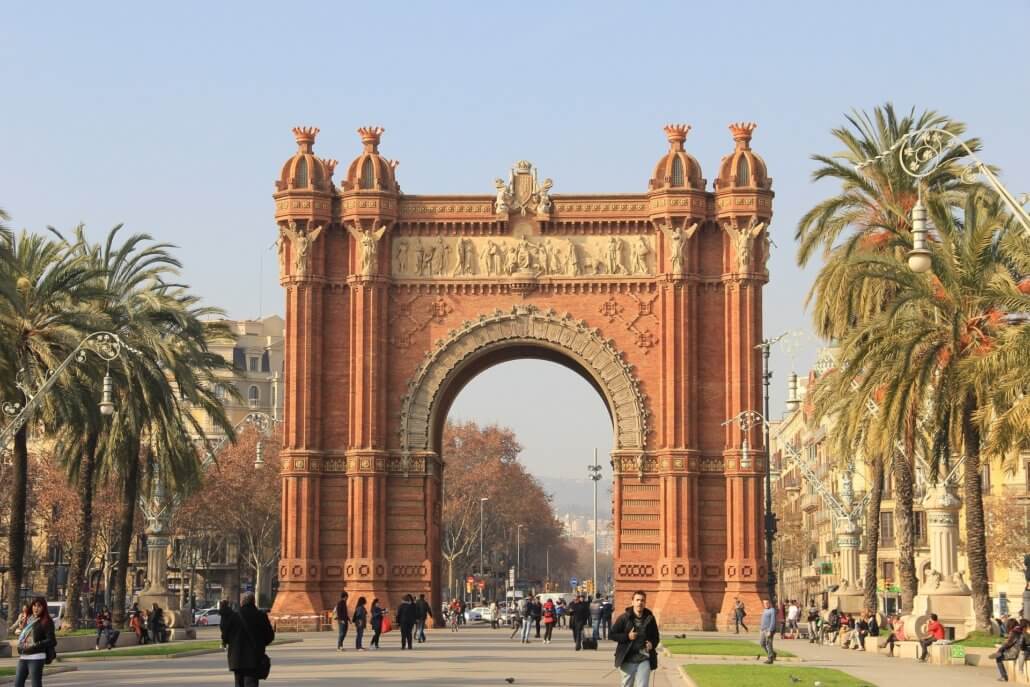
Barcelona is simultaneously one of Europe’s most visited cities and one of its most architecturally extraordinary — the city where Antoni Gaudí spent most of his working life, leaving a built legacy that has no parallel anywhere in the world. The Sagrada Família (under construction since 1882, expected completion around 2026), Park Güell, Casa Batlló, and La Pedrera all require advance booking and all deliver on their reputations. Beyond Gaudí, the Gothic Quarter, the El Born neighborhood, the Barceloneta waterfront, and the Eixample grid have distinct characters worth exploring. Pickpocketing is common in tourist areas — front-facing bags and money belts are practical rather than paranoid precautions.
Madrid has the Prado, the Reina Sofía, and the Thyssen-Bornemisza within 15 minutes’ walk of each other — the greatest concentration of world-class art museums in any city in the world after New York, and one that is systematically underrated by visitors who spend all their Spain time in Barcelona. Velázquez’s Las Meninas, Goya’s Black Paintings, Picasso’s Guernica, and the Thyssen’s Impressionist collection are all here. Beyond the museums, Madrid’s neighborhood culture — the tapas bars of La Latina, the restaurants of Malasaña and Chueca, the Sunday Rastro flea market — and its extraordinary nightlife (dinner at 10pm is early, clubs open at 2am) reward visitors who give the city the time it deserves.
Seville is Andalusia’s most theatrical and most atmospheric city — the home of flamenco in its most authentic form, of the world’s largest Gothic cathedral (where Columbus is buried), and of the Real Alcázar, the Moorish palace complex that is the finest surviving example of Mudéjar architecture in Spain. The tapas tradition in Seville includes the specifically Sevillian custom of receiving a small free tapa with every drink ordered at the bar. The barrios of Santa Cruz (the old Jewish quarter), Triana (across the Guadalquivir River), and Macarena (the working-class neighborhood with the finest local tapas bars) all reward slow exploration. Seville in July and August is extremely hot — temperatures regularly exceed 40°C. April, May, October, and November are significantly better.
Granada’s Alhambra — the Nasrid palace complex built on a hill above the city by the last Muslim rulers of Iberia — is the most visited monument in Spain and one of the most extraordinary buildings in the world. Entry tickets sell out months in advance and must be booked on alhambra-patronato.es as far ahead as possible. The Albaicín neighborhood (UNESCO World Heritage) faces the Alhambra across the valley and has the best views from the Mirador de San Nicolás at sunset. Granada is also one of the last cities in Spain where the free tapas tradition survives in full form — every drink ordered at a bar arrives with a small free tapa, making eating and drinking in Granada extraordinary value.
Spain’s AVE high-speed rail connects everything. Book Alhambra and Sagrada Família before your flights.
Getting between cities. Renfe’s AVE high-speed rail is Spain’s best asset for intercity travel — Madrid to Barcelona takes 2.5 hours, Madrid to Seville 2.5 hours, Madrid to Granada 3.5 hours. Competing operator Ouigo offers budget fares on key routes. Book at renfe.com — advance booking yields meaningfully better prices.
Non-negotiable advance bookings. The Alhambra in Granada and the Sagrada Família in Barcelona both sell out months in advance. Book before you book your flights — not as an afterthought. The Prado and Reina Sofía in Madrid require advance booking in peak season but are more manageable.
Adjust to Spanish time. The single most important cultural adaptation for visiting Spain is eating and going out on Spanish schedule. Lunch at 2–3pm, dinner at 9–10pm, bars filling after midnight. Visitors who eat at 7pm and go to bed at 11pm are experiencing a parallel Spain that barely exists.
Explore more of our Spain coverage below.